Marketing Strategy For Small Business Owners Who Lack Extra Time
September 8, 2026 · Jamie Barber
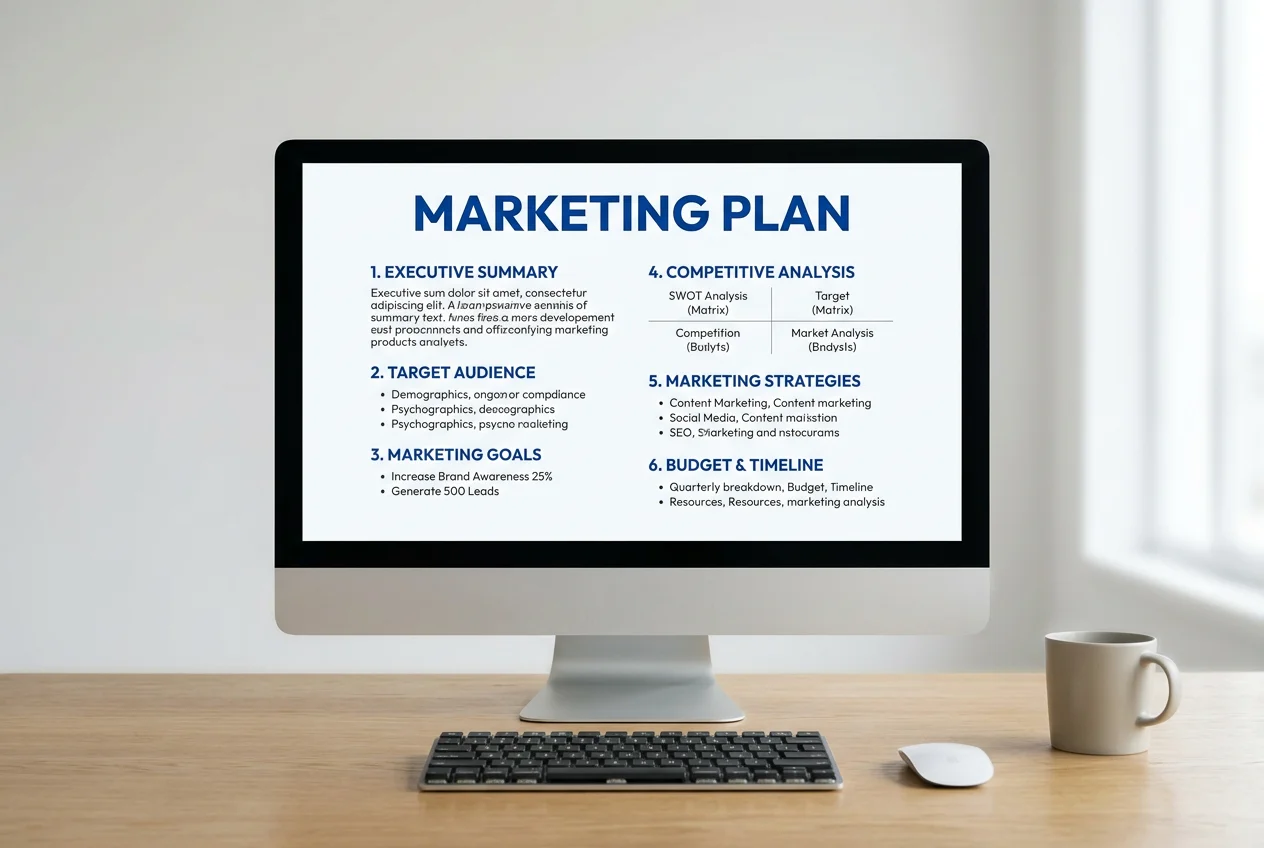
Most entrepreneurs treat a marketing plan like a gym membership in January. You spend a lot of energy setting it up. You feel great about the potential, and then you tuck it away in a drawer where it collects dust. I have seen this happen for twenty years. Business owners think they need a massive, complex document to succeed. However, a plan that stays buried in a file isn't a strategy. It's just a wish list.
A real marketing strategy for small business needs to be a living, breathing guide. It should be the thing that stops you from staring at a blank cursor every morning. To actually grow, you need to take those big, yearly goals and break them down into tasks that you can actually finish. When you move from guessing to executing, that's when the magic happens. You don't need to be a marketing genius. You just need a path to follow.
How To Create A Marketing Plan That Actually Works
Before you start posting on social media or running ads, you need a foundation. You wouldn't build a house without a blueprint. You shouldn't try to grow a brand without a clear small business marketing plan to guide you. I’ve created this small business marketing plan template for you to use for free without having to be a BizManna member. It’s not gated at all so use it as your guide. If you feel stuck, you can always sit down with a marketing coach (like me) to map out the big goals. Just make sure the document itself is something you actually use. Here's exactly what needs to be in your document before you take action.
Define Your Mission And Executive Summary
Start with the big picture. Your executive summary is just a quick snapshot of what your business does and what you want to achieve this year. Follow that with your mission statement. Why does your business exist? What's the company's core purpose and overall long-term vision? When things get busy and stressful, this section reminds you why you started in the first place. It keeps your eyes on the prize when the daily tasks feel heavy.
Know Your Market And The Competition
You can't win if you don't know who else is on the field. Do some market research to look at industry trends and market size. Is your market growing or shrinking? Conduct a competitive analysis to see what your rivals are doing well and where they're dropping the ball. This helps you find the gaps where your business can shine. Understanding the landscape is the first step toward standing out.
Identify Your Target Market
Stop trying to sell to everyone. If you're talking to everyone, you're talking to no one. Define your ideal buyers using demographics like age and income, but don't stop there. Look at their psychographics too. What are their habits? What do they value? What keeps them up at night? When you know exactly who you're talking to, your strategy becomes much more effective because your message finally hits home.
Set SMART Marketing Goals
Vague goals like get more customers won't help you. You need specific, measurable, achievable, relevant, and time-bound objectives. For example, aim to increase your website traffic by 20 percent in the next ninety days. This gives you a clear target to hit. It also makes it easy to see if your tactics are working. Without these goals, you're just throwing spaghetti at the wall to see what sticks.

The Four Ps Of Marketing
This is a classic framework for a reason. Detail your Product (what you sell), Pricing (how much it costs), Place (where people buy it), and Promotion (how people hear about it). Getting these four things aligned is the secret to a solid market positioning strategy. It ensures that what you're selling actually matches what your customers want and where they hang out.
Choose Your Action Strategies And Tactics
This is where you decide which channels to use. You don't need to be everywhere at once. Pick the ones that make sense for your audience, whether that's SEO, email campaigns, social media, or paid ads. These are the primary marketing strategies for entrepreneurs who want to reach their goals. Instead of trying to master every platform, focus on the ones that actually move the needle for your specific industry.
Set A Budget And Track KPIs
Decide how much you'll spend on tools, staff, and ad placements so you don't overspend. Finally, choose your Key Performance Indicators. These are the numbers you'll check every week to make sure you're still on the right path. Tracking your data is the only way to know if your tactics are actually paying off or if you're just wasting money.
Marketing Strategy For Small Business Execution
Once you have your plan, the biggest hurdle is usually execution. Most people stop here because the plan feels too big to handle. This is where you need to shift your mindset. Instead of looking at the whole year, look at the next seven days. The best marketing strategy for small business is the one that actually gets done.
The secret to building a marketing engine is consistency. You don't need four hours a day to do this. If you can commit to just twenty minutes a day, you can get more done in six months than most businesses do in two years. You just need to know which task to do next. When you break a massive plan into small steps, the overwhelm disappears and you start making real progress.
Breaking Down The Execution Tasks
To keep your plan alive, you need to turn your big objectives into daily tasks. If your goal is better SEO, your task for today might be writing a blog or new webpage. If you want better email engagement, your task might be drafting a a new email sequence that focuses on outcomes. Small wins lead to big results over time.
There's an entire dashboard of tools available today to help you manage your digital presence. You can handle social media, SEO, influencer marketing, email, and PR without needing to be techy. The goal is to avoid the browser tab chaos and focus on one thing at a time. When you follow a weekly roadmap, you stop feeling like a frantic multi-tasker and start feeling like a true CEO or CMO.
Building Your Marketing Engine
In a year's time, those twenty-minute sessions add up. You'll wake up one day and realize you have a complete marketing engine running. Your SEO will be bringing in leads, your emails will be nurturing customers, and your social media will be building community. This all happens because you decided to execute instead of just plan. You'll move from I don't know what to do to it's already done.
The quiet confidence that comes from predictable progress is worth more than moments of notoriety. You don't need a massive budget or a huge team to win. You just need a system that keeps you moving forward every single day. By focusing on guided execution, you take the guesswork out of growth. You ensure your plan never sits in a drawer again.
Start Your Strategy Today
Ready to stop guessing and start growing? Try our free marketing plan module to plan out your marketing strategy. Then, when you're ready for weekly execution, BizManna provides a weekly growth plan to keep your business's marketing plan on track with all the tools you need to actually execute them. Try it free for 7 days.
Keep reading
Get the next playbook by email
Practical marketing moves for small business owners, sent as we publish them. No spam, unsubscribe anytime.