How To Build A Weekly Marketing Execution Plan That Works For Your Business
November 17, 2026 · Jamie Barber

It's 8 PM on a Sunday, and you're looking at a messy list of ideas for your business. You need to post on social media, update your website, and finally start those ads you’ve been thinking about. But without a clear starting point, you keep bouncing between tasks without finishing them.
You're working hard, but marketing keeps getting pushed behind everything else. Having an overall strategy is important, but progress depends on turning that strategy into consistent marketing execution.
The Gap Between Planning And Doing
A marketing execution plan connects your goals to the work you’ll do this week. It tells you what deserves your attention, what you need to complete, and how you’ll measure progress.
It shouldn’t be a fifty-page document that sits in a folder. It should be a practical roadmap you can follow when you sit down to work.
I’ve spent twenty years in marketing, and I’ve seen the same thing happen to smart business owners over and over. They have the vision, but the details slow them down. They’re switching between fulfilling orders, answering customers, and trying to learn how to set up an ad campaign or improve their SEO.
I built BizManna to bridge that gap: to turn strategy into manageable daily actions so you can spend less time deciding and more time getting your marketing done.
Building Your Foundation On Positioning
Before building your weekly plan, start with your positioning. Effective execution of marketing plan tasks depends on knowing who you’re trying to reach and why they should choose you.
Look at your industry, your competitors, and what makes your business different. Then get specific about your ideal customers. What problems do they need help with? What do they value? What would make your offer relevant to them?
Those answers shape where you show up, what you say, and which tasks belong in your plan. When your messaging reflects what customers actually care about, your marketing becomes more useful to them—not just more content to publish.
With that foundation in place, answer five questions:
1. What business goal needs attention this week? Choose a clear priority, such as generating qualified inquiries, promoting a launch, or improving sales from existing website traffic.
2. What do your current numbers suggest is getting in the way? Review the relevant data or run an audit. Do you need more visitors, a clearer offer, or an easier way for people to take action?
3. Which tasks could address that problem? Choose work that supports your priority rather than filling the calendar with activities that don’t connect to it.
4. What can you realistically finish? Consider your available time, budget, and any events or deadlines that affect the week.
5. How will you measure progress? Define what “finished” means for each task and which business outcome you’ll monitor afterward.
This is how your marketing execution plan becomes more than a to-do list.
A busy marketing week isn’t necessarily a productive one. If your website gets visitors but few inquiries, publishing more social posts may not address the immediate problem. Improving your service page or inquiry form may deserve priority.
If your offer is converting but few people see it, reaching more relevant prospects may be the next step.
Choosing High ROI Tasks
Choosing high-ROI tasks means considering where your effort is most likely to help—not assuming every marketing activity deserves equal attention. Your weekly plan should reflect your business goals and current performance, rather than a generic template.
The Power of Time-Boxed Marketing Execution
Time matters, too. One reason marketing gets pushed aside is that the work expands beyond the time you have. If every social post takes two hours, staying consistent becomes difficult.
Give each task a clear finish line and a realistic time estimate. Instead of writing “work on social media,” write “draft and review next week’s posts.” Instead of “improve the website,” choose a specific page and improvement.
Time-boxed marketing execution helps you keep the scope manageable. You can focus on finishing useful work rather than endlessly polishing one piece while everything else waits.
Checking Your Progress Every Thirty Days
Your plan also needs regular review. Check active campaigns during the week, then take a broader look at your numbers every thirty days.
Choose measures that match your goals, such as qualified inquiries, purchases, or sign-ups. Review what you completed, what changed, and what still needs attention. Use those findings to decide what to continue, improve, or pause.
That review keeps your digital marketing execution plan connected to what’s happening in your business. You’re not repeating tasks simply because they were on last month’s calendar.
A Realistic Weekly Growth Roadmap
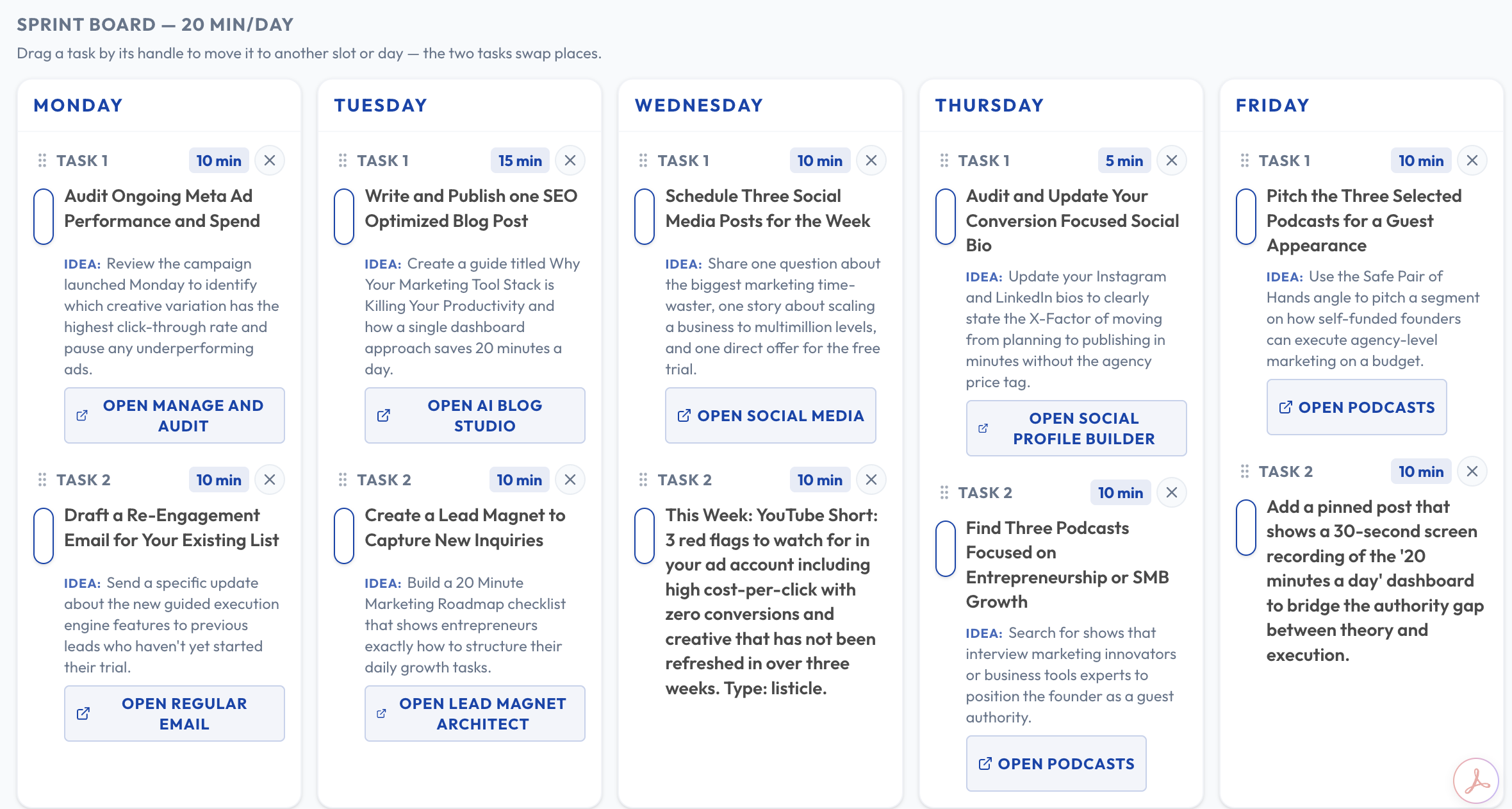
BizManna brings this strategy and execution together in one dashboard. You start with what you want to accomplish, and the Weekly Growth Planner turns that goal into specific tasks you can act on.
Choose your overall goals, then add context for the week. Are you promoting a sale, launching a product or service, or preparing for an event? Enter your budget, too. Even if it’s $0, the planner can help you build a plan around organic marketing strategies.
Your Weekly Growth Planner draws on your Market Positioning—including your business, audiences, competitive gaps, and what makes you different—to recommend work that fits your goals. Instead of a generic marketing checklist, you get a weekly calendar of high-ROI tasks informed by your business and what you’re trying to achieve right now.
BizManna’s audit tools help make that plan more specific. When an audit identifies something that needs attention, it can add a task to your calendar. Your findings don’t sit in a report waiting for you to figure out what to do with them. They become part of your weekly execution plan.
Each task includes a time estimate and links directly to the AI tool you’ll use to complete it. You can move from knowing what needs to happen to actually doing it—without having to write extensive prompts or figure out the process from scratch. Each tool has a demo video that will walk you through the process. Create the draft, review and refine it, and put it to work.
That connection matters. A strategy can sound great on paper and still go nowhere if it doesn’t translate into work you have time to finish. The Weekly Growth Planner breaks your goals into manageable actions, helping you make progress in 20 minutes a day instead of waiting for a free afternoon that never comes.
Stop Juggling And Start Scaling
Your marketing week should feel achievable. You know what deserves your attention, how it supports your goals, and where to start. Finish today’s task, get back to your clients, and return tomorrow with a clear next step.
That’s how marketing becomes part of running your business—not something you keep meaning to get to.
You don’t need another Sunday evening spent rearranging the same marketing ideas. You need a practical plan and a way to follow through.
BizManna connects your goals, positioning, and audit findings to a weekly calendar of tasks, with the tools to carry them out. Instead of ending the week wondering where your marketing time went, you can see what you’ve completed and know what comes next.
Keep reading
Get the next playbook by email
Practical marketing moves for small business owners, sent as we publish them. No spam, unsubscribe anytime.